Upcycled fabric patches and embroidered patches on organic or recycled bases give you the best balance of durability and lower impact for most repairs and customization projects. Conventional PVC patches hold up well but are harder to recycle, so we’d save them for projects where that trade-off makes sense. Keep in mind that any supplier calling a patch simply “eco friendly” without specifics is skipping a step that the FTC Green Guides actually require.
TL;DR:
- Upcycled fabric patches on organic or recycled bases typically offer the best durability and lower environmental impact for most repairs.
- Sew-on backed embroidered patches are the most long-lasting and sustainable, especially on garments that endure frequent washing.
- Proper material sourcing requires verifying recycled content, washability, backing type, and requesting physical samples for quality assurance.
- DIY patching with thick fabrics like denim or canvas, using stabilizers and careful stitching, is accessible and environmentally friendly.
- Patching jeans or worn textiles can reduce life-cycle emissions by nearly half compared to replacement, especially for short-lived or disposable garments.
Table of Contents
- 1. Types of eco-friendly patches and when to use each
- 2. How to choose an eco-friendly patch without falling for greenwashing
- 3. DIY upcycled patch methods for individuals and small makers
- 4. Sustainability impact: what the evidence actually shows
- 5. How to apply and care for eco-friendly patches so they last
- 6. Why we lean toward certain eco-minded patch options
- How Lee Embroidery can help with your next patch order
- FAQ
- Sources
1. Types of eco-friendly patches and when to use each
Patches aren’t one material wearing different colors. Each construction method changes how long a patch lasts, how it affects the planet, and what job it’s actually suited for.
Embroidered patches use thread stitched onto a fabric base, and when that base is organic cotton or post-consumer recycled polyester, you get a patch that’s both sturdy and lower impact, as explained in this guide to responsibly made fashion. They’re the strongest choice for covering holes or reinforcing high-wear spots like elbows and knees, since the dense stitching adds real structural strength to the fabric underneath.
Woven patches skip the thick embroidery and use fine threads woven tightly together, which makes them thinner and better suited to detailed logos or text. They don’t add much reinforcement, so they work best for branding and decoration rather than structural repair.
Printed patches apply a design directly onto fabric, often with less material waste than embroidery since there’s no thread buildup. They’re a reasonable pick for short-run decorative projects, though the ink and backing matter more here than with embroidered options.
Upcycled fabric patches are cut from reclaimed denim, worn-out canvas, or other salvaged textiles. They cost almost nothing in new material and divert fabric that would otherwise be discarded, making them one of the most genuinely low-impact options available to a home sewer or small maker.
Leather and cork patches bring a different texture and a longer lifespan to the mix. Cork in particular is biodegradable and renewable, harvested without cutting down the tree, which makes it an interesting alternative for anyone avoiding animal leather.
A few quick notes on backing:
- Sew-on backing lasts the longest and avoids adhesive chemicals, making it the better choice for garments you plan to wear for years.
- Iron-on backing uses heat-activated glue that’s fast to apply but can degrade after repeated washing, shortening the patch’s useful life.
- Peel-and-stick backing is the least durable option and tends to leave residue, so we’d reserve it for temporary or one-time uses.
- Velcro backing allows patches to be swapped between garments, which extends the life of the patch itself even if one garment wears out.
If you’re patching a hole, go embroidered or upcycled fabric with a sew-on backing. If you’re adding a brand label to apparel, a woven or embroidered patch reads cleaner. For a one-off decorative project, printed or peel-and-stick patches get the job done without overcommitting materials you won’t reuse.
2. How to choose an eco-friendly patch without falling for greenwashing
Picking a patch that’s genuinely lower impact takes a short checklist, not a leap of faith based on packaging language.
- Check material origin. Post-consumer recycled content (made from used textiles or bottles) generally has a smaller footprint than pre-consumer scrap, so ask which one you’re getting.
- Ask for the recycled percentage. A claim like “contains recycled polyester” with no number tells you very little.
- Confirm the backing type. Sew-on backings skip adhesive chemicals entirely and last the longest on garments that get regular washing.
- Test washability before committing to a bulk order. A patch that bleeds color or peels after a few cycles isn’t saving anyone anything.
- Estimate expected lifespan. A patch meant to outlast the garment is a better environmental bet than one you’ll replace within a year.
The FTC Green Guides specifically warn against broad, unqualified terms like “eco friendly” or “green,” and they ask marketers to qualify claims with specifics; “made with 50% post-consumer recycled cotton” passes that bar, while “eco friendly patch” alone does not. The Federal Register notice behind these guides walks through exactly which phrasing misleads buyers and which qualifies as substantiated, which is worth skimming if you’re sourcing patches for resale.
When you’re talking to a custom patch maker, ask these three things before you order: can they send a physical sample, have they tested the patch for colorfastness through multiple wash cycles, and what’s their minimum order size. A maker who answers all three without hesitation is usually one worth working with.
Pro Tip: Request a sample in writing that states the exact fiber content and recycled percentage, not just a verbal assurance, so you have something to hold the order against if it arrives different.
3. DIY upcycled patch methods for individuals and small makers
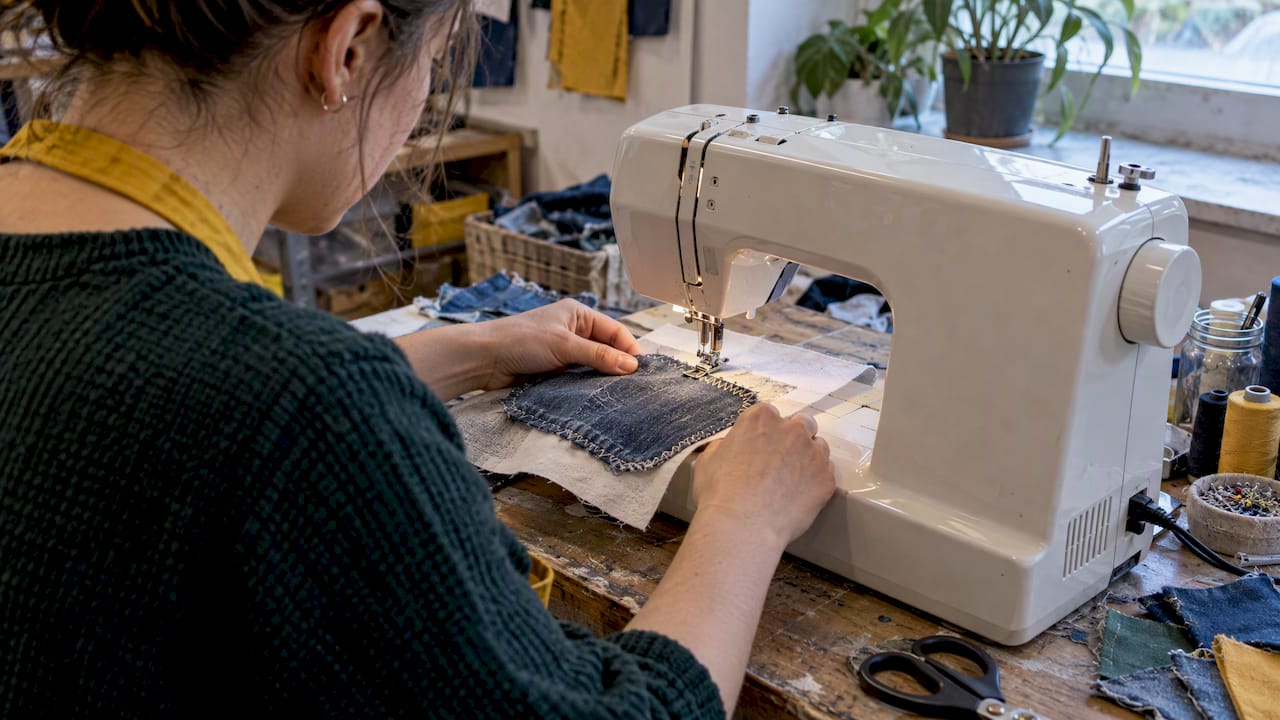
You don’t need a workshop to make a durable patch from fabric you already own. Denim, cotton twill, and canvas are the standard picks for homemade patches because they’re thick enough to resist fraying, sew cleanly, and are often sitting in your closet already as old jeans or jacket scraps.
Here’s the sew-on method, start to finish:
- Cut your patch slightly larger than the hole or design area, leaving at least a half inch of extra fabric on every side.
- Add a stabilizer (a scrap of interfacing or even a second layer of fabric) behind the patch to prevent the stitching from puckering.
- Pin the patch in place and turn the garment inside out if you want the raw edges hidden.
- Stitch around the perimeter with a tight zigzag or straight stitch, going over any visible edges twice for reinforcement.
- Trim loose threads and press the seam flat with an iron.
For an adhesive route, fusible web (a mesh adhesive sheet) is a more repairable option than spray adhesive since it can be re-heated and repositioned if you make a mistake. Place it between the patch and garment, press with a hot iron for the time listed on the packaging, then stitch around the edge anyway for added hold.
The most common mistake is skipping the stabilizer, which leads to puckered, uneven stitching. The second is using a straight stitch alone on a high-stress area like a knee, where a zigzag holds up far longer.
4. Sustainability impact: what the evidence actually shows
The case for repair and upcycling isn’t just intuitive, it’s been measured. A life cycle assessment on upcycling in the apparel industry found that upcycled accessories often carry substantially lower environmental impacts than new equivalents, though that advantage shrinks fast if the upcycled item doesn’t last as long or if the processing itself uses a lot of energy.
Repair reduced life-cycle climate emissions by a substantial proportion for jeans in modeled scenarios, often outperforming replacement outright.
That figure comes from research on jean repair versus replacement, and it points to what we’d call the fast fashion repair paradox: the cheaper and more disposable a garment was to begin with, the more climate benefit you get from patching it instead of tossing it, because replacing a short-lived item carries a disproportionately high footprint per wear.
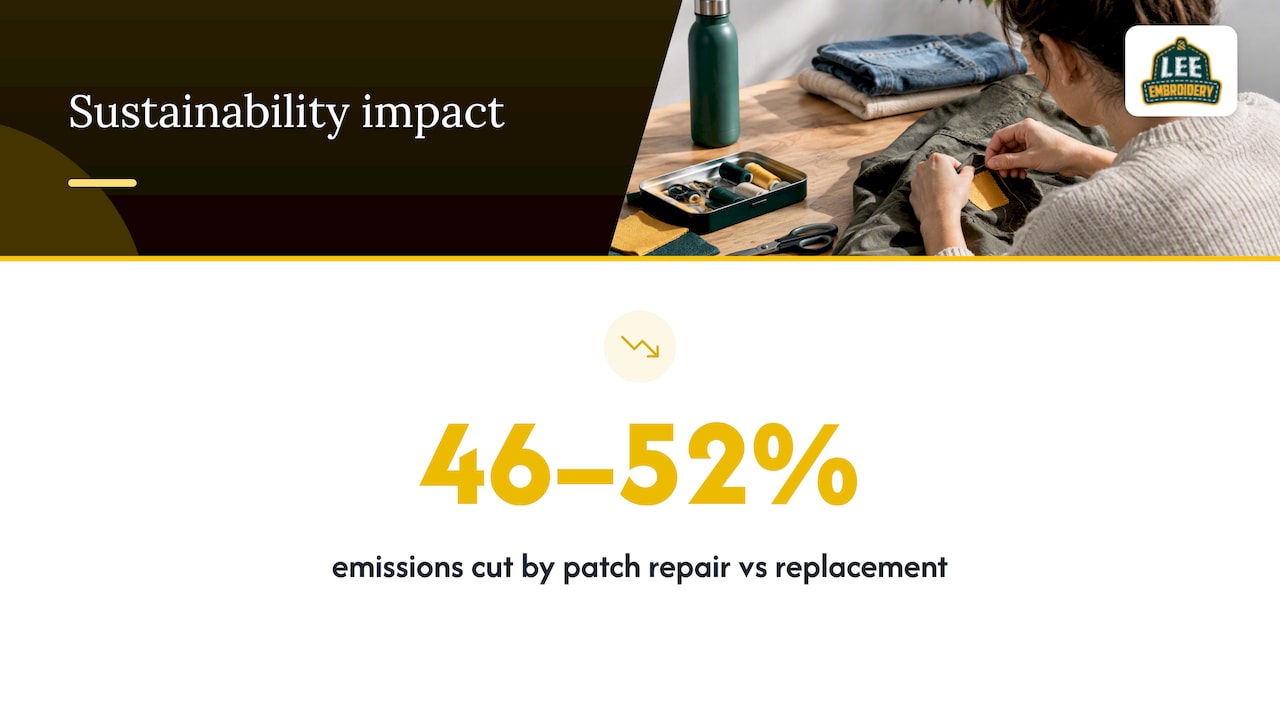
A patch repair can cut a garment’s remaining life-cycle emissions by 46-52% compared to replacing it, according to the jeans repair study, with transport playing only a minor role in that outcome.
None of this gives any supplier a free pass to slap “eco friendly” on a product tag. The FTC Green Guides still require that environmental claims be specific and substantiated, which means you should expect a real material breakdown from anyone selling you a “sustainable” patch, not a slogan.
5. How to apply and care for eco-friendly patches so they last
Getting the application right protects whatever environmental advantage the patch material already has. A patch that falls off after three washes didn’t save anything.
- Prep the garment first by washing and drying it so the fabric has already shrunk to its final size before you attach anything.
- Choose sewing over heat for garments that see frequent washing, since stitching holds up far longer than adhesive under repeated agitation.
- Wash patched garments inside out on a gentle cycle to protect embroidery threads and adhesive edges alike.
- Air dry when possible, especially for iron-on patches, since high dryer heat is what usually loosens the glue first.
- Separate components at end of life. If a patch has to come off a garment headed for recycling or disposal, remove it first so the fabric and backing can be sorted separately.
Pro Tip: If you’re removing an iron-on patch for reuse, apply gentle heat from the back of the fabric with a cloth barrier, then peel slowly. Reheating softens the adhesive without scorching either surface.
6. Why we lean toward certain eco-minded patch options
After years of producing patches in every material from embroidery thread to PVC, our honest read is that durability and genuine sustainability usually point to the same answer: sew-on embroidered patches on a solid fabric base. They outlast adhesive options, they don’t shed microplastics the way some bonded materials can, and they’re easy to transfer if a garment wears out first.
Our own capability runs the other direction too. We produce custom embroidered, woven, and PVC-style patches, and we provide samples so you can check fabric content and stitch quality before committing to a bulk order. If you’re sourcing patches for resale or for a brand project, ask for the fiber content in writing, request a sample, and default to sew-on backing unless you have a specific reason not to.
— Bilal
How Lee Embroidery can help with your next patch order
If you’re ready to move from research to an actual order, we make that part simple. We offer custom patches in embroidered, woven, chenille, printed, and leather options, with complimentary samples sent before you commit to a full run, so you can verify material and stitch quality firsthand.

When you place an order with us, here’s what to ask for:
- A sample in your chosen material so you can check weight, colorfastness, and backing before paying for bulk production.
- A fast quote turnaround to help plan your project timeline.
- Your backing preference stated upfront, whether that’s sew-on for longevity or iron-on for convenience.
- Specific fabric content, so you know what base material your patch is built on.
Start with a quote on our main patches page and tell us what you’re trying to repair, brand, or customize.
FAQ
What is the best fabric to use for making homemade patches?
Denim, cotton twill, and canvas are the top choices because they’re thick enough to resist fraying and sew cleanly on a standard machine. All three are commonly available as post-consumer material, often cut from old jeans or jackets you already own, which keeps the project close to zero new material.
What are the three types of patches?
The most common construction types are embroidered, woven, and printed patches, though leather, chenille, and PVC-style versions are widely available too. Embroidered patches add the most structural reinforcement, woven patches suit fine detail, and printed patches work well for short decorative runs.
Are patches reusable?
Yes, especially patches attached with Velcro backing, which lets you move a patch between garments as one wears out. Sew-on patches can also be carefully removed and reapplied, though iron-on adhesive patches are harder to reuse cleanly since the glue weakens once peeled.
What kind of clothing can you put patches on?
Patches work on denim, canvas jackets, cotton apparel, caps, and bags, basically any fabric sturdy enough to hold stitching or heat-activated adhesive without scorching. Lightweight or delicate fabrics usually need a stabilizer behind the patch area to prevent puckering or tearing.
Sources
- FTC: Environmental claims summary — Green Guides
- Federal Register: Guides for the use of environmental marketing claims (Green Guides)
- The environmental performance of upcycling: A comparative life cycle assessment in the apparel industry
- Circularity without circular design: Where jeans repair delivers the greatest climate benefit