Yes, you can wash garments with patches, and the results come down to one rule: keep it cool, keep it gentle, and skip the dryer when you can. Cold or lukewarm water, mild detergent, a gentle cycle or hand wash, and a quick test on a hidden spot protect both the fabric and the patch underneath.
TL;DR:
- Embroidered and woven patches can withstand gentle machine washing, whereas chenille and leather patches are safer with hand washing or spot cleaning.
- Backing type significantly influences durability, with sew-on backing generally lasting longer than heat-seal or adhesive options during frequent washes.
- Using cold or lukewarm water, a mild detergent, and avoiding high heat in drying prevents adhesive failure and prolongs patch lifespan.
- Testing patches on a hidden area before washing helps detect bleeding or lifting, especially for new items.
- Reinforcing iron-on patches with stitches and proper storage extends their condition between washes.
Table of Contents
- Know your patch and backing before you wash
- How to hand wash and machine wash patched garments
- Machine vs. hand wash, plus dryer and re-adhesion rules
- How to spot clean stains without damaging the patch
- Keeping patches intact between washes
- What patch manufacturing teaches us about washability
- Our take: test first, trust the backing, not the hype
- Durable patches built to handle real washing
- FAQ
- Sources
Know your patch and backing before you wash
Every patch is built differently, and that build determines how much heat and agitation it can handle. Embroidered patches use dense thread stitching over a twill base, chenille patches have a looped pile that can mat if scrubbed too hard, and PVC or rubber patches are molded and fairly water-resistant but sensitive to heat. Printed patches carry ink on fabric or vinyl, woven patches use finer thread for detailed designs, and leather patches need to stay away from soaking altogether.
Backing matters just as much as the patch material itself:
- Sew-on backings hold up best in the wash since the thread does the work, not glue.
- Iron-on or heat-seal backings rely on an adhesive that softens under heat, so hot water or a hot dryer can loosen it over time.
- Adhesive or peel-and-stick backings are the most vulnerable to soaking and should generally be hand washed or spot cleaned only.
- Velcro backings wash fine but should be closed or covered to stop them from snagging other fabrics.
Here’s a one-line reference: embroidered and woven patches tolerate gentle machine cycles, chenille and leather do best hand washed or spot cleaned, and anything heat-sealed needs cool water and no dryer heat.
How to hand wash and machine wash patched garments
A little prep goes a long way. Before you wash anything, check the garment’s care label, since fabric and dye both affect your options, and cold or cool water with gentler cycles protects trims and patches better than a standard hot cycle. Test the patch on a hidden edge first, turn the garment inside out, and place it in a mesh laundry bag if you’re using a machine.
Hand washing sequence:
- Fill a basin with cool or lukewarm water and a small amount of mild detergent.
- Submerge the garment and let it soak for 10 to 15 minutes.
- Gently swish the fabric by hand, focusing light pressure around the patch edges rather than scrubbing directly on them.
- Rinse thoroughly with cool water until the detergent is gone.
- Blot excess water with a towel, then lay the garment flat to air dry.
Machine washing sequence:
- Choose a gentle or delicate cycle with cold water.
- Add a small amount of mild detergent and skip fabric softener and bleach, both of which can weaken adhesive and thread.
- Place the garment inside out in a mesh bag, positioned away from zippers or rough seams.
- Run a gentle spin or add an extra rinse cycle to clear out detergent residue without extra agitation.
If heavily soiled before washing, pre-soaking in warm, not hot, water with detergent loosens surface dirt without risking the adhesive.
Pro Tip: Before washing a new patched item for the first time, dab a damp cloth with a little detergent and press it against a corner of the patch for a minute. If color transfers or the edge lifts, hand wash only going forward.
Machine vs. hand wash, plus dryer and re-adhesion rules
Whether you reach for the machine or the sink depends on three things: the fabric, the backing, and how often the item gets washed. A cotton jacket with a sew-on patch that gets washed weekly can handle a gentle machine cycle. A delicate blouse with an iron-on patch worn occasionally is safer hand washed every time.
Drying is where most patches actually fail, not washing itself.
- Air dry flat in the shade whenever possible, since direct sun can fade both fabric and patch color.
- If you must use a dryer, choose the lowest heat setting and the shortest cycle, since heat-activated adhesives weaken under high heat and aggressive tumbling.
- Never run a steam iron directly on a patch. If you need to press the garment, iron around it or use a press cloth as a barrier.
If an iron-on patch starts lifting at the edges after a wash, you have two practical fixes. Place a thin cloth over the patch and press with a warm, not hot, iron for 10 to 15 seconds to reactivate the adhesive, or add a few hand stitches along the loose edge for a permanent fix. Either approach beats letting a corner curl further with every wash.
How to spot clean stains without damaging the patch

Stains near a patch call for a lighter touch than a full wash cycle. Blot the stain first, apply a mild detergent solution with a soft cloth, gently brush or swish the area, then rinse. Always test your cleaner on a hidden edge before applying it to the visible patch.
Some products do more harm than good. Strong solvents and high-pH bleach can break down heat-seal adhesive and dull thread color, so reach for gentler options instead. Low-pH soaps protect delicate printed fabric and backing better than standard laundry detergent, especially on printed patches where ink sits close to the surface.
- Grease: dab a small amount of dish soap directly on the stain, let it sit for a few minutes, then rinse.
- Ink: blot, don’t rub, with a cloth dampened in rubbing alcohol, working from the outside of the stain inward.
- Mud: let it dry completely, brush off the loose dirt, then treat the remaining mark with mild detergent.
A patch that passes a spot test on its edge first is far less likely to bleed color or lift during full laundering.
Keeping patches intact between washes
A little routine maintenance keeps patches looking sharp long after the first wash. Check edges periodically for lifting or loose threads, since catching a problem early means a quick fix instead of a full patch replacement.
- Resew any lifted edge with a needle and matching thread before it spreads further.
- Add reinforcement stitches around the perimeter of iron-on patches on garments that get washed often, like work uniforms or team gear.
- Store patched garments flat or on padded hangers to avoid creasing directly across the patch.
- Keep patched items away from rough fabrics in storage that could snag embroidery or chenille loops.
Pro Tip: If you’re outfitting a team or staff with the same patched uniform, ask your manufacturer for a sew-on backing option instead of iron-on for anything washed more than once a week.
What patch manufacturing teaches us about washability
Years of producing custom patches in embroidered, chenille, PVC, printed, woven, and leather styles have shown us that washability starts long before laundry day. It starts with backing choice and material selection at the design stage. Complimentary samples and fast quote turnaround are helpful so you can test a patch’s feel and durability before committing to a bulk order.
If you’re ordering patches for uniforms, team gear, or branded merchandise, run through this short checklist with your supplier first:
- Request a physical sample to test wash and wear before placing a full order.
- Ask for the backing’s heat rating, especially for iron-on options.
- Get washing recommendations in writing so care instructions match the exact materials used.
Our take: test first, trust the backing, not the hype
Most advice on patch care treats washing like a guessing game, when the real variable is almost always the backing, not the fabric. A sew-on patch on a cheap shirt will outlast an iron-on patch on premium denim every time, because thread doesn’t soften under heat the way adhesive does.
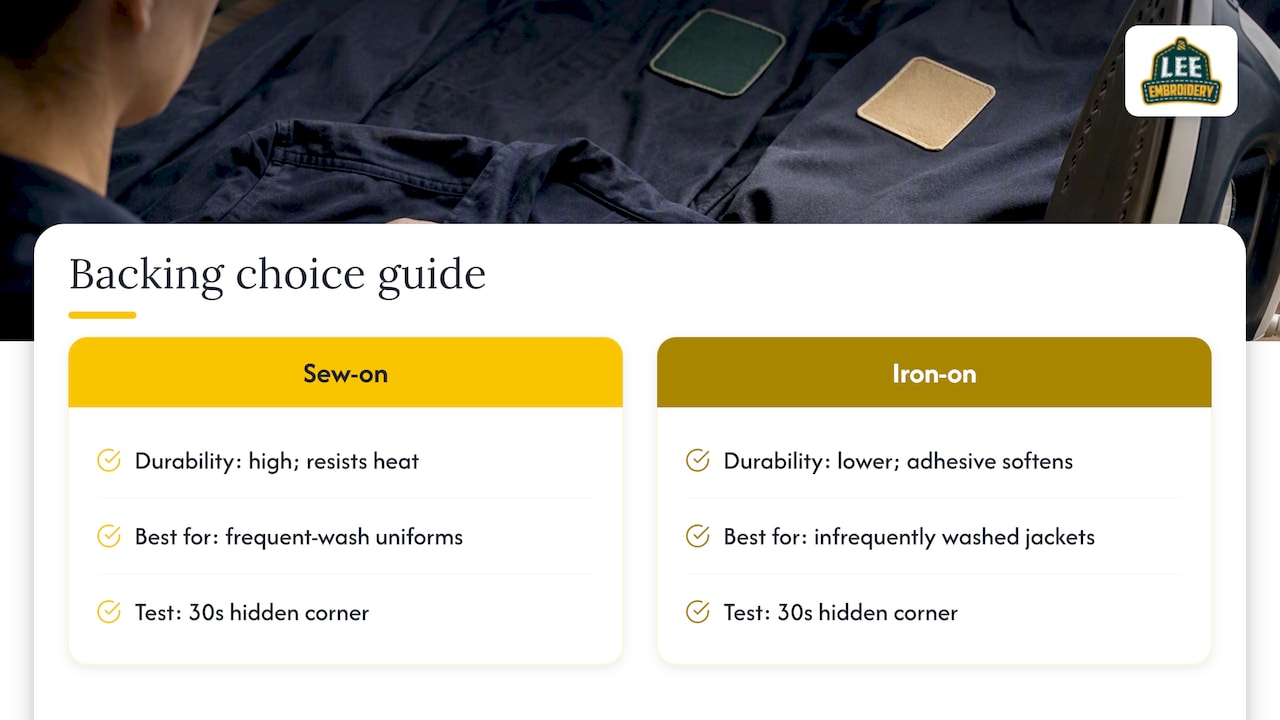
The conventional wisdom oversells the dryer as the enemy. The bigger risk is skipping the test step entirely. A thirty-second check on a hidden corner tells you more about how a patch will hold up than any generic care label.
If you take one thing from this, prioritize matching backing to use case before you even think about detergent or water temperature. A patch on a jacket you wash twice a year has different needs than one on a uniform washed weekly, and the backing choice should reflect that from the start, not get patched up after the fact.
— Bilal
Durable patches built to handle real washing
Patches can be designed with their actual use in mind, from embroidered designs for jackets to chenille letters for varsity wear to weather-resistant PVC for outdoor gear. Backing options such as sew-on, iron-on, peel-and-stick, or Velcro should be matched to how you plan to wear and wash the finished piece; complimentary samples can help test adhesion and colorfastness before ordering in bulk.

- Explore Custom Patches for backing options and bulk order quotes.
- Browse Embroidered Patches for detailed, stitched designs built to last through regular washing.
Request a free sample and quote today to see how a patch holds up before it ever touches your garment.
FAQ
Will iron-on patches survive a washing machine?
Iron-on patches can survive gentle, cold-water machine cycles, but repeated hot washes and high heat drying will gradually weaken the adhesive. For longer life, hand wash iron-on patches or add a few reinforcement stitches around the edges.
How do I wash a patch on a garment?
Turn the garment inside out, wash in cold or lukewarm water with mild detergent on a gentle cycle or by hand, and skip the dryer in favor of air drying flat. Testing the patch on a hidden edge first helps catch any color bleeding or lifting before a full wash.
How do I clean clothes with iron-on patches?
Wash inside out in cold water using a gentle cycle or hand wash, and avoid fabric softener, bleach, and high heat, all of which can break down the adhesive underneath the patch. Air drying flat keeps the patch secure far longer than regular dryer cycles.
Can you machine wash all types of patches?
Embroidered and woven patches generally tolerate gentle machine cycles, while chenille, leather, and adhesive-backed patches do better hand washed or spot cleaned. Checking the backing type before washing helps you choose the safer method.
How do I remove dirt from a patch without damaging it?
Blot the area first, then use a mild detergent solution with gentle brushing rather than scrubbing directly on the patch. Rinsing thoroughly and air drying flat afterward keeps both the patch and surrounding fabric intact.
Sources
- Cleaning Uniforms | The American Cleaning Institute (ACI)
- Machine Applique Techniques | USU Extension