Choose chenille for bold, raised varsity-style letters, and choose embroidered patches for detailed logos and smaller sizes. Chenille’s tufted pile reads best at a distance and holds up well on jackets, while embroidered patches use thread and stitch density to capture fine lines that chenille simply cannot replicate. Both styles can be customized with different backings, so your fabric and laundering needs matter just as much as the look you want. The sections below walk through exactly how each patch is built and where it performs best.
TL;DR:
- Chenille patches are best for large, bold letters that need to be visible from a distance, especially on jackets and team banners.
- Shorter chenille pile offers better abrasion resistance and durability over time compared to longer pile, which matts faster.
- Embroidered patches excel at capturing fine detail, small text, and subtle shading that chenille cannot replicate, making them ideal for logos and branding.
- Stabilizer and backing choices significantly impact patch comfort, durability, and flexibility, with options tailored to fabric type and laundering frequency.
- Always test samples on your actual garment fabric before mass production to avoid issues like puckering, stiffness, or loss of detail.
Table of Contents
- What Are Chenille Patches? Construction, Look, and Where They Shine
- What Are Embroidered Patches? Threads, Stitch Density, and Production Basics
- Head-to-Head: Texture, Detail, Sizing, Durability, and Cost
- Materials, Backings, and Fabric Compatibility That Change the Result
- How to Choose: Checklist and Supplier Questions Before Ordering
- A Production Perspective on Chenille and Embroidered Patches
- Get Custom Chenille or Embroidered Patches Made Right
- FAQ
- Sources
What Are Chenille Patches? Construction, Look, and Where They Shine
Chenille patches get their signature fuzzy, raised texture from tufted yarn loops stitched onto a felt or fabric base. The yarn is looped through the base material in dense rows, then trimmed to create that soft, brushed surface you can actually feel when you run your hand across it. This construction is what gives chenille its vintage, varsity look, the kind you see on classic letterman jackets and collegiate insignia.
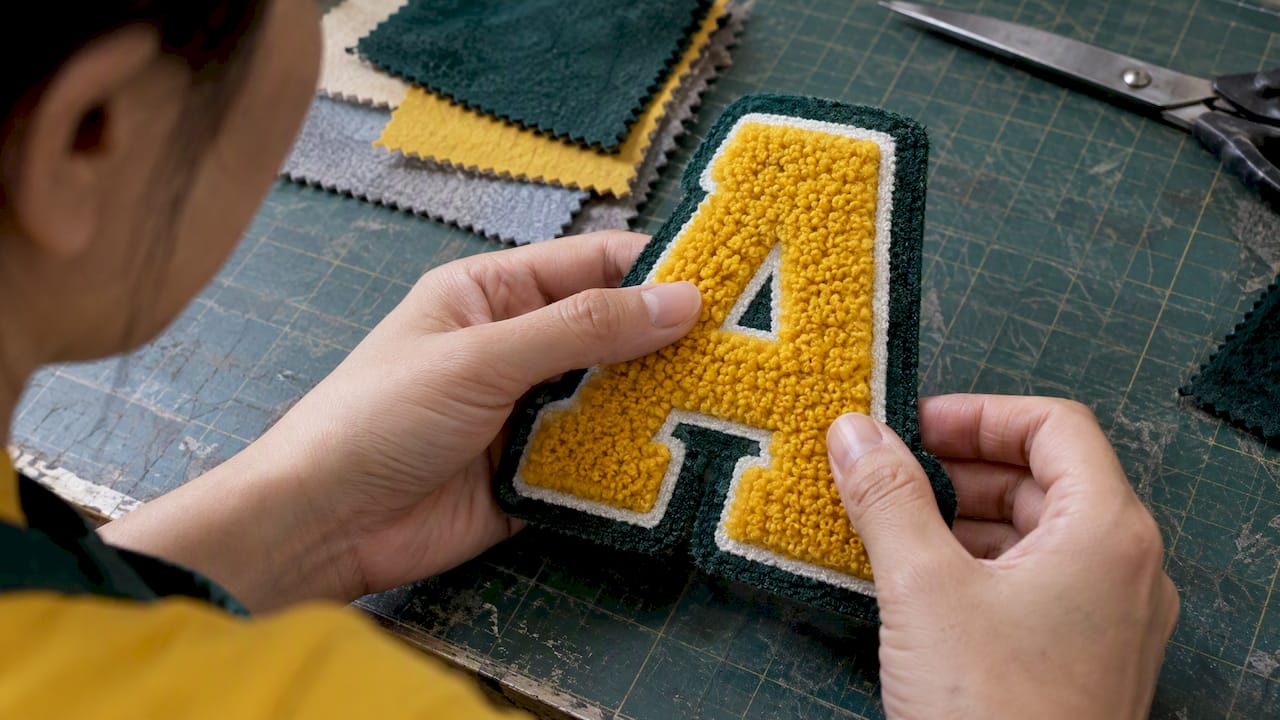
Pile length plays a big role in both appearance and durability. A shorter pile tends to hold up better against repeated friction, since shorter yarn loops are less likely to mat down or snap under abrasion compared to longer, looser piles that can look impressive on day one but wear unevenly over time. We typically pair chenille with a felt base and finish the edges with a merrowed border, which gives the patch a clean, defined edge that complements the raised texture instead of fighting it.
Chenille works best when:
- You want bold, large-format letters or numbers, like varsity “letters” or team initials.
- The design needs to read clearly from a distance, such as on a jacket back or team banner.
- You’re going for a tactile, retro aesthetic rather than a flat, corporate look.
- The patch size is generous enough to accommodate thick yarn loops without crowding fine details.
What Are Embroidered Patches? Threads, Stitch Density, and Production Basics
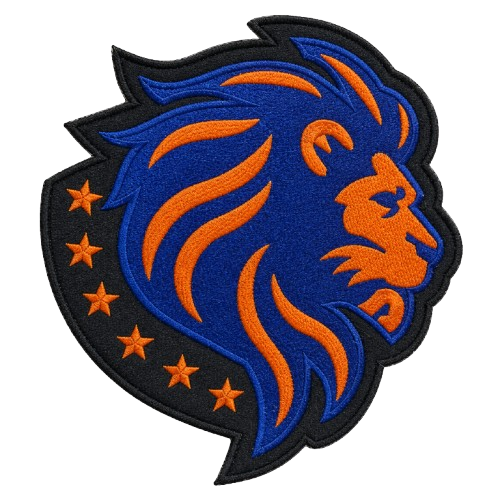
Embroidered patches are built from thread stitched directly onto a stabilized backing using a digitized file that tells the embroidery machine exactly where each stitch goes. That digitizing step matters more than most buyers realize: it converts your artwork into a stitch path, and the quality of that conversion determines how crisp your final patch looks.
Stitch density and stitch length create a real trade-off. Pack stitches too tightly and you risk puckering or even damaging the base fabric, since dense stitching can stress the material it’s sewn into. Space them too far apart and you get visible gaps that make the design look unfinished and thin. Getting that balance right is part of what separates a clean patch from a muddy one, especially on designs with small text or fine linework.
Backing choice also depends on where the patch will live. A stiffer cutaway stabilizer suits caps and structured garments, while a lighter tearaway or heat-away option works better on delicate fabrics that can’t handle a heavy hand.
Embroidered patches shine for:
- Corporate logos and badges that need crisp, readable detail at small sizes.
- Designs with fine linework, small text, or subtle shading.
- Uniforms and caps where a flatter, more polished profile is preferred.
- Branding that needs to stay legible even when scaled down.
Head-to-Head: Texture, Detail, Sizing, Durability, and Cost
Once you understand how each patch is made, the practical differences become easier to weigh against your actual project.
- Texture and appearance: Chenille delivers a raised, fuzzy surface you can feel, while embroidered patches lie flat with a cleaner, more polished finish.
- Detail and resolution: Thread-based embroidery captures small text, thin lines, and subtle gradients far more precisely than chenille’s thick yarn loops ever could.
- Minimum practical size: Chenille needs more room to breathe, since tufted yarn can’t render fine detail, so it works best at larger sizes viewed from a few feet away. Embroidered patches can shrink down to cap-sized designs and still stay legible up close.
- Durability under wear: Pile length directly affects abrasion resistance. Shorter chenille pile shows lower mass loss in abrasion testing than longer pile, which tends to mat and break down faster with repeated friction.
- Backing and the “badge effect”: Both styles can feel stiff or heavy if the wrong backing is paired with a lightweight fabric, a problem usually solved through stabilizer selection rather than switching patch styles entirely.
- Cost drivers: Chenille costs climb with pile material and felt base quality, while embroidery costs rise with stitch count, since denser designs take longer to produce and use more thread.
Shorter chenille pile shows lower mass loss under abrasion than longer piles, based on lab testing, according to the E‑Zee backing guide. That single data point explains why “longer pile looks more dramatic” doesn’t always translate to “longer pile lasts longer.” If your patches will see daily wear on a jacket or backpack, pile length deserves as much attention as color and size.
Mapping these axes to real products: jackets and large team patches favor chenille’s bold readability, caps and uniforms favor embroidery’s flatter profile, and performance knit fabrics generally call for embroidery with a lightweight stabilizer to avoid stiffness.
Materials, Backings, and Fabric Compatibility That Change the Result
The backing you choose affects how a patch feels, drapes, and wears almost as much as the patch style itself. According to the E‑Zee backing guide, stabilizer selection should be planned alongside your design, not treated as an afterthought.
Common backings and their best matches:
- Cutaway stabilizer: Best for structured garments like caps and heavier jackets that can handle a firmer hand.
- Tearaway stabilizer: Suited to delicate or lightweight fabrics where you need to remove excess backing cleanly.
- Heat-away backing: Useful for fine detail work where any leftover residue would show through.
- Badge film: A 100-micron film used to create pop-away badges, ideal for patches that need a clean, defined edge without extra stitching.
Base fabric matters too. Piqué knits, twill, nylon, and performance knits all respond differently to stitching pressure, and a lightweight cutaway stabilizer on a performance knit reduces the stiff, heavy “badge effect” that makes a patch feel bolted onto fabric instead of part of it. Attachment method matters as well: sew-on tends to suit both chenille and embroidered patches, while iron-on and Velcro backings work better on embroidered patches destined for uniforms that need removable branding.
Pro Tip: Always test a sample patch on your actual garment fabric before committing to a full order, since puckering and stiffness often only show up once the patch meets the real material.
How to Choose: Checklist and Supplier Questions Before Ordering
Before you commit to a style, run through a short checklist that matches your project’s real constraints rather than just your visual preference.
- Viewing distance: Will people see this patch up close, like on a shirt pocket, or from a few feet away, like on a jacket back?
- Size: Larger patches give chenille room to breathe; smaller patches almost always call for embroidery.
- Level of detail: Fine text or shading points you toward embroidered patches every time.
- Fabric type: Delicate or performance fabrics need lighter stabilizers, which usually favors embroidery.
- Laundering needs: Frequent washing favors tighter, shorter pile or well-secured embroidery over loose, long chenille pile.
- Quantity and budget: High stitch counts drive embroidery costs up, while premium pile materials and felt bases drive chenille costs up.
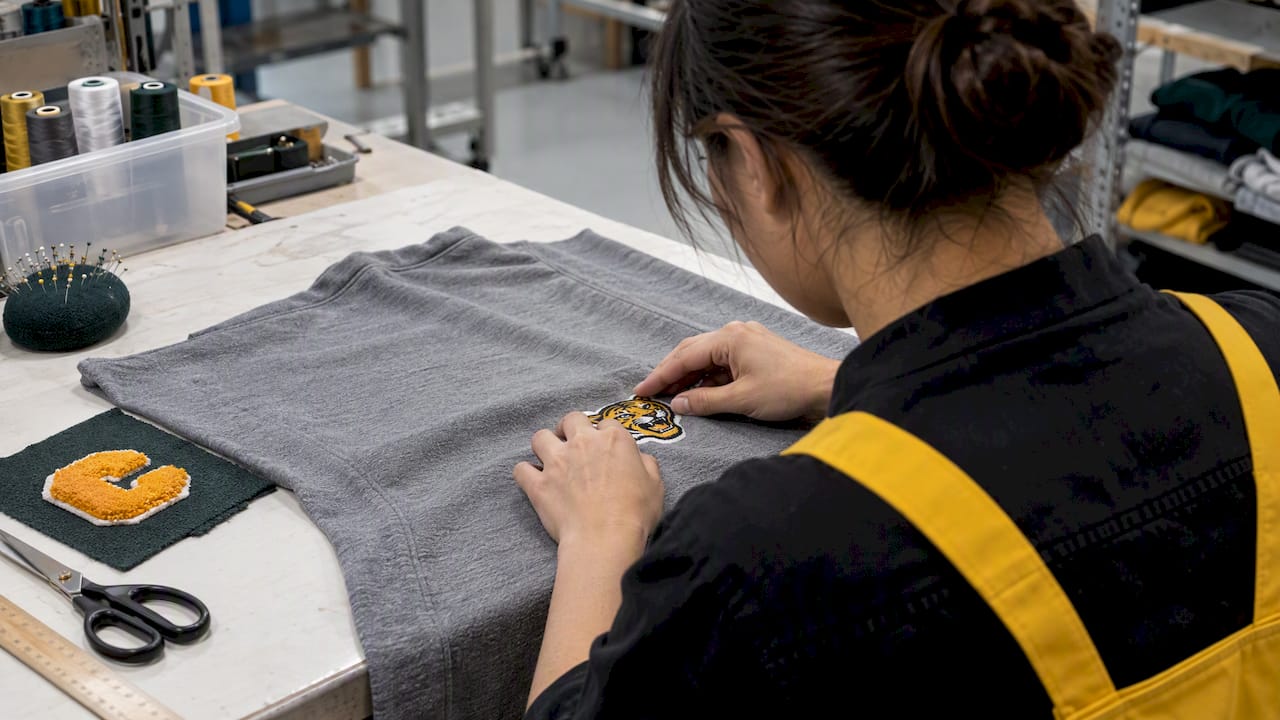
When you reach out to a supplier, ask for samples that show actual pile length or stitch detail, not just a digital mockup. Ask about backing options, available attachment methods, turnaround time, and how color matching works, since thread and yarn colors don’t always translate exactly from a screen to a finished patch.
Pro Tip: Request a physical sample before placing a bulk order. It’s the fastest way to catch pile length, stitch density, or color issues before they become 500 identical mistakes.
A Production Perspective on Chenille and Embroidered Patches
Having worked across both chenille and embroidered production, we’ve noticed that buyers rarely make the wrong choice because they misunderstand the aesthetics. They make it because they skip the physical sample step and discover too late that a design’s fine text got lost in chenille’s pile or that a performance fabric felt stiff under a heavy embroidery backing. The fix is almost always the same: inspect the actual materials, not a rendering of them.
Our honest take is that the “better” patch style is really a better match, not a better product. A varsity jacket covered in flat, minimalist embroidery loses the nostalgic punch that chenille delivers, and a tiny corporate logo rendered in chenille loses all its crispness. The smartest move a team or brand can make is treating pile length and stitch density as design decisions, not afterthoughts, and asking for a sample before locking in a bulk run.
— Bilal
Get Custom Chenille or Embroidered Patches Made Right
We specialize in custom patch manufacturing, including chenille patches and embroidered patches, so whether you need bold varsity letters or a detailed small logo, we build it to match your fabric and use case.

Orders can be supported by rapid quote turnaround and complimentary samples, so pile length, stitch density, and color can be checked before committing to a full run. That matters most for teams, schools, and small brands ordering in bulk, where one overlooked detail multiplies across every piece. Our embroidery digitizing service, including Left Chest, Cap, and Jacket Back options starting at $10 and $30 respectively, handles the file prep that determines how clean your final stitching looks.
If you’re ready to see your design in person before ordering at scale, visit our custom patches page to request a free sample and quote.
FAQ
What kind of fabric is best for patches?
The best base fabric depends on the patch style and backing. Twill and felt work well for chenille, while piqué, nylon, and performance knits often pair better with embroidery and a lightweight stabilizer to avoid stiffness.
What is the difference between chenille and embroidery?
Chenille uses tufted yarn loops to create a raised, fuzzy texture, while embroidery uses thread stitched in a digitized pattern to create a flat, detailed design. Chenille suits bold, large letters, while embroidery handles fine lines and small text better.
Are woven or embroidered patches better?
Woven patches offer a flatter, more detailed look than traditional embroidery for designs with very fine lines or small text, since they use thinner threads. Embroidered patches, meanwhile, offer more texture and dimension, making the choice depend on how much detail versus texture your design needs.
What are chenille patches used for?
Chenille patches are commonly used for varsity letters, large jacket back patches, and retro-style insignia where a bold, tactile look matters more than fine detail. They read well from a distance, which makes them a classic choice for team and school apparel.