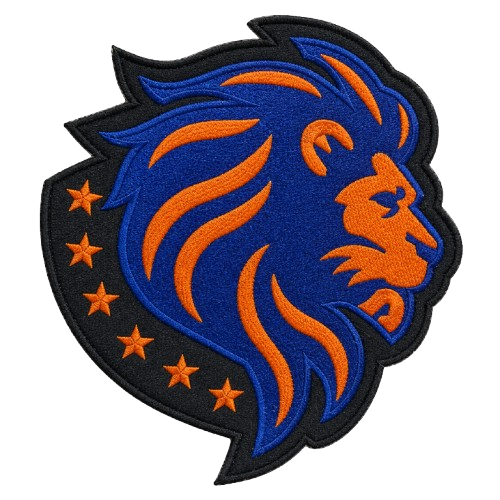
PVC patches are among the most durable custom patch options. They resist water, abrasion, and fraying, and with the right backing and basic care they typically serve for multiple years. The weak point is rarely the PVC itself but the attachment and how you wash it. Embroidered patches suit dress looks, while PVC wins on heavy use and outdoor gear.
TL;DR:
- Choose sew on backing for permanent patches on frequently washed garments; stitches keep holding as adhesive ages, while heat seal suits lighter use.
- Wash garments inside out on a gentle cycle at up to 40°C with mild soap; air dry, and avoid bleach, solvents, and prolonged dryer heat.
- Adhesive failure often starts with edge lift; request peel test results for your fabric after heat and flexing, because PVC plasticizers can weaken bonds.
- Use hook and loop for removable identification patches, but treat peel and stick versions as temporary branding because frequent washing limits their durability.
Table of Contents
- 1. What PVC patches are and why the material performs well
- 2. How long do PVC patches last, and what changes it?
- 3. How well do PVC patches handle water, weather, UV, and washing?
- 4. Which attachment methods fail first, and why?
- 5. PVC vs. embroidered patches: which holds up better?
- 6. Which type of PVC patch fits your use?
- 7. How do you care for PVC patches so they last?
- 8. What a manufacturer’s view adds on durability
- 9. How do we help you get durable PVC patches?
- FAQ
- Sources
1. What PVC patches are and why the material performs well
A PVC patch is molded, not stitched. Flexible PVC is poured into a shaped mold, cured, and finished with color, which gives you a raised, rubbery surface with crisp edges. There are no threads to snag, pull loose, or fuzz up, and that single difference explains most of the durability advantage.
Flexible PVC gets its give from plasticizers, additives that keep the material soft instead of brittle. UV stabilizers are added so sunlight does not fade the colors or chalk the surface. Together they make a patch that bends with a sleeve or a bag strap without cracking.
Compared with thread, the molded surface handles friction far better. A woven or embroidered face is made of many small fibers, and each one can wear through when it rubs against a seat belt, a pack strap, or a rough wall. A solid PVC face has no loose ends to catch. Moisture behaves the same way: thread absorbs water and holds dirt, while PVC sheds both.
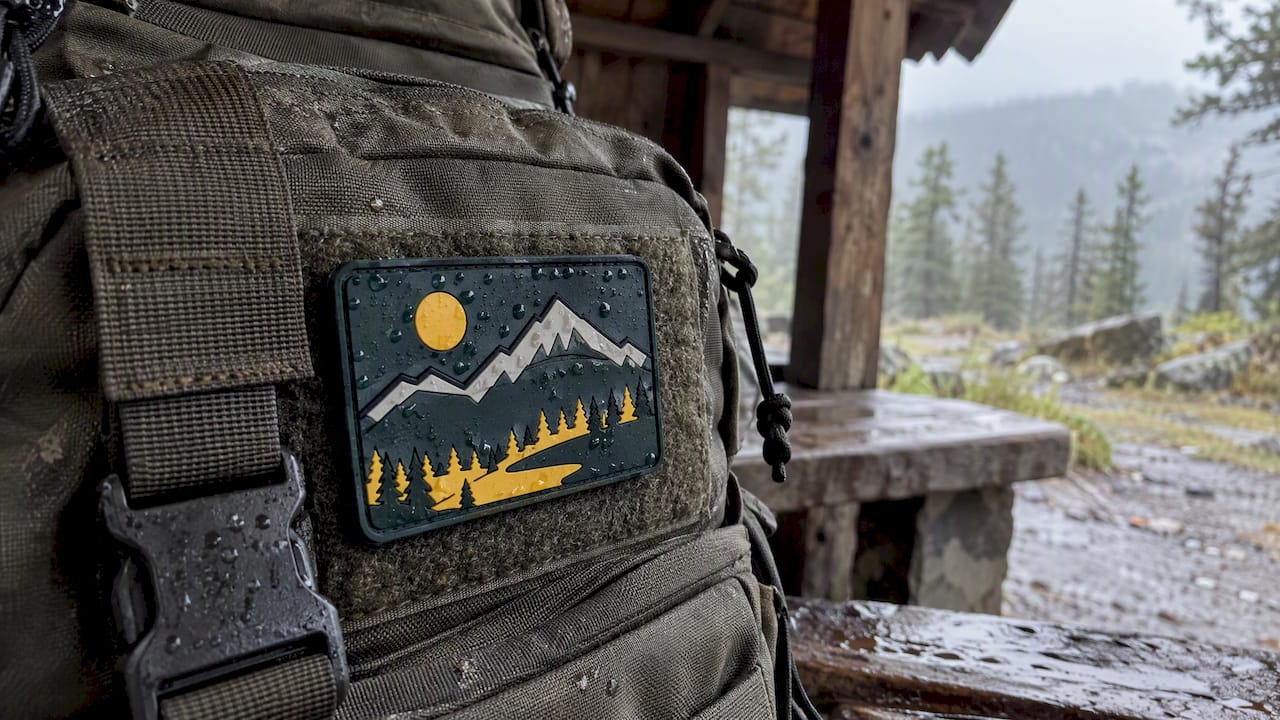
That is why we make our PVC rubber patches for gear that gets used hard, from work jackets to tactical packs. The material is built for abuse, but it still needs the right backing underneath, which we cover below.
2. How long do PVC patches last, and what changes it?
Plan on multiple years of service for a well-made PVC patch that is attached properly. Product testing of vinyl repair patches, a close cousin of this material, found that peel-and-stick patches and heavy-duty tapes can form strong, long-lasting bonds when applied correctly, and many such products deliver multi-year performance in repeated wet and dry use. That is a repair-patch test, not a test of apparel patches, but it points the same way: the bond is what decides the outcome.
Several factors move the number up or down:
- Backing and attachment: A sewn patch outlasts a glued one on most fabrics.
- Fabric compatibility: Stretchy knits flex more and test any adhesive harder than a stiff canvas.
- UV and heat exposure: Years of sun and hot storage slowly drive plasticizers out, which stiffens the patch.
- Abrasion: Constant rubbing on a strap or seat wears the raised edges first.
- Cleaning frequency: Frequent hot washing shortens the life of the bond long before it hurts the PVC.
For anyone writing a spec, industry practice is to check adhesion against ASTM D751 and ask for a peel-force test, so you can assess whether edges may curl after washing. Treat that as a reference point to put in a purchase order, and ask your supplier to show test results for your fabric.
3. How well do PVC patches handle water, weather, UV, and washing?
PVC itself is waterproof. Rain, sweat, and spills do not soak in, and the colors do not bleed the way thread dyes sometimes do. Many PVC patches also tolerate repeated washing, but the attachment sets the real limit, not the face of the patch.
UV is a slower story. UV-stabilized PVC holds its color well outdoors. Over many years, heat ageing and gradual plasticizer loss can reduce flexibility, so an old patch on a sun-baked jacket may feel firmer than a new one. Rotating gear and avoiding long stretches in a hot car helps.
For laundry, keep it gentle:
- Turn the garment inside out so the patch is protected.
- Use a cold or warm cycle, not hot. Industry guidance for PVC puts warm water up to 40°C with mild soap as the safe cleaning protocol.
- Skip bleach and strong solvents, which can pull plasticizers out and lead to cracking or color loss.
- Air dry, or use low heat for a short time.
Dirt and moisture trapped in folds around the edges break down the bond faster than anything else, so rinse thoroughly. Manufacturer guidance for PVC-coated fabrics says regular cleaning and thorough drying can extend service life, in some cases up to twenty years. That figure describes coated fabrics, not patches, but it shows how much maintenance matters for the same material family. Our full steps are on our patch washing instructions page.
4. Which attachment methods fail first, and why?
Most PVC patch failures are attachment failures. The face stays fine while the backing lets go of the garment, which is why backing choice deserves as much thought as the design.
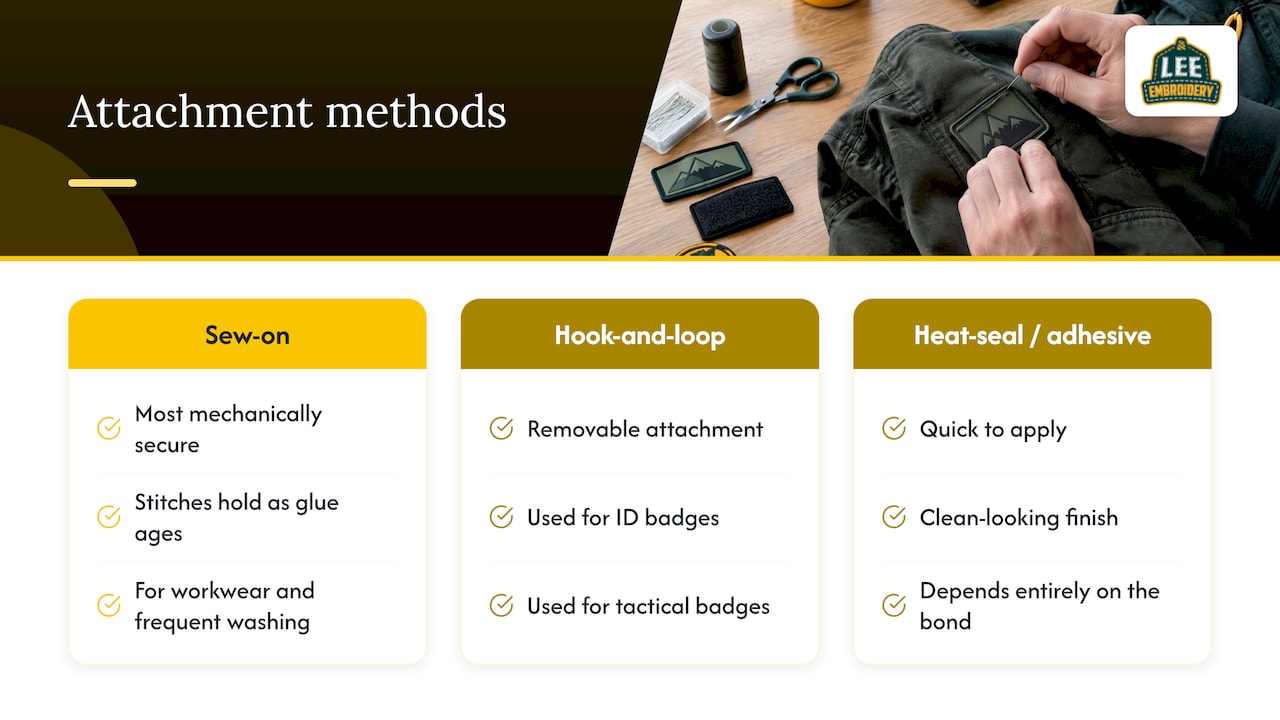
Sew-on is the most mechanically secure. Stitches hold the patch even if the glue ages, so it is our pick for work wear and anything washed often. Hook-and-loop (Velcro) suits patches you want to remove, such as ID or tactical badges. Heat-seal and bonded adhesive are the convenient options, quick to apply and clean looking, but they depend entirely on the bond.
That bond is harder than it looks. Flexible PVC contains plasticizers that can migrate and soften adhesive bonds over time, so you need adhesives rated for plasticized PVC and testing on aged samples for heat and flexing, not just a good first impression. Lab work on aged PVC membranes points the same direction: solvent-based adhesive bonding held up better in peel tests than hot-air welding after heat ageing. These were roofing-type membranes, so use the finding as a hint about adhesive behavior, not a promise about patches.
The usual failure looks like edge lift, then peel, then full delamination. Match the backing to the fabric, confirm peel strength, and add stitches around the border when the garment will be washed hard. Our guides on patch backing types and patch adhesive types go deeper.
5. PVC vs. embroidered patches: which holds up better?
On durability and upkeep, PVC leads. It does not fray, it ignores water, and it wipes clean. Embroidered patches are needlework, so under heavy rubbing the threads can fuzz, pill, and eventually break, especially on borders and fine lettering.
Legibility is the other difference. PVC keeps sharp edges and strong contrast, so small text, logos, and badges stay readable from a distance. Embroidery gives a textured, traditional look that reads as heritage and craft, and it drapes softly on fabric. Fine detail below a certain size can blur in thread, while molded PVC reproduces it cleanly.
A quick decision checklist:
- Heavy-duty uniforms, outdoor gear, bags, and caps that see rain: choose PVC.
- Dress uniforms, blazers, and a classic look: choose embroidered.
- Small, detailed logos that must stay readable: lean PVC.
- A soft hand-feel on lightweight fabric: lean embroidered.
Our PVC vs. embroidered patches guide walks through the common ordering mistakes. We make both, so the choice should come down to the job the patch has to do.
6. Which type of PVC patch fits your use?
Pick the type by how long the patch must stay on and how often the garment is washed.
Hook-and-loop (Velcro): Best for removable tactical and ID patches. You can swap them between jackets or take them off before washing, which also protects the hook side from lint.
Sew-on and heat-seal: Best for permanent placement on apparel and hats. Stitching adds insurance on garments that get washed weekly, and heat-sealing alone suits lighter use.
Self-adhesive (peel-and-stick): Best for temporary branding, event giveaways, and low-cost demos. Long-term washing durability is limited, so treat these as short-run solutions and not as the choice for a daily uniform.
If you are unsure, start with sew-on for anything permanent. It is the type least likely to surprise you over time.
7. How do you care for PVC patches so they last?
Good care costs almost nothing and adds years.
- Clean gently. Use mild soap and warm water with a soft cloth. Avoid bleach, acetone, and other solvents that cause plasticizer migration.
- Wash smart. Choose gentle cycles at moderate temperatures, turn the garment inside out, and skip long dryer heat. Dry the item fully before storing it, since trapped moisture weakens the bond.
- Inspect often. Check the edges every few weeks. If a corner starts to lift, sew it down right away.
- Store cool. Keep gear out of hot cars and direct summer sun when it is not in use.
8. What a manufacturer’s view adds on durability
Most buyers ask how long the PVC lasts, when the better question is how long the bond lasts on their exact fabric. The material rarely fails first. A great patch with the wrong backing will peel, and a plain patch with the right one will survive years of washing. The industry spends too much time praising PVC and too little time testing the glue, the fabric, and the stitching together. A free sample washed a few times on your own garment tells you more than any spec sheet, and that is how I would specify it for any heavy-use order.
— Bilal
9. How do we help you get durable PVC patches?
We make custom PVC rubber patches built for the real wear they will see. You can test before you commit, with complimentary samples and a quick quote turnaround.
- Custom shapes, colors, and raised detail on our PVC rubber patches
- Sew-on, iron-on, peel-and-stick, and Velcro backing options
- Complimentary samples so you can wash-test adhesion and look on your own fabric
- Care guidance on our patch washing instructions page

Request a sample or a quote today, and we will help you choose a patch for your needs.
FAQ
How long do PVC patches usually last?
Well-made PVC patches typically last multiple years with proper attachment and care. Sew-on backings tend to last longest, while adhesive backings depend on the bond and how often the garment is washed.
Can PVC patches go through the washing machine?
Many can, on a gentle, cool or warm cycle with the garment turned inside out. Avoid bleach and long dryer heat, and check that the backing is rated for washing before you rely on it.
What is the best way to attach a PVC patch for long life?
Sewing is the most secure, since stitches keep working even if an adhesive ages. For a removable option, hook-and-loop works well, and glued backings should be rated for plasticized PVC.
How much does a custom PVC patch cost?
Pricing depends on size, shape, colors, and quantity, and our PVC patch prices are available on request. Ask us for a quick quote and a complimentary sample before you order.
Sources
- Washing and maintenance instructions for PVC and PVC/PU coated fabrics – Scantarp
- Gluing PVC: what works and what does not | The Adhesive Library
- The Best Pool Patches – Tested by Bob Vila
- Reparability of aged PVC waterproofing membranes: Effect of joining method