Direct embroidery is the better pick for a clean, simple logo on a hat. A patch is the better pick when your artwork has fine detail, needs texture, or has to look like a collectible. Embroidery stitches thread straight into the cap. A patch is made separately, then sewn, heat-applied or otherwise attached to the cap. That one difference drives everything else: look, feel, durability, cost and what you can do with the design later.
This guide walks through each trade-off so you can decide before you order. It also covers the mistakes that cause reprints.
TL;DR
- Choose direct embroidery for simple, bold logos in roughly 1 to 4 colors, a flat, quiet look, and a permanent, integrated finish.
- Choose patches for fine lines, small text, gradients, or materials like leather, PVC and chenille that thread can’t copy.
- Patches are more flexible. You can make one batch and put it on several hat styles, or swap it later. Direct embroidery is locked into the cap.
- Order a sample first whichever way you go. Hats are curved, and a design that looks right on screen can fail on the crown.
- Not sure? Send us your artwork for a free quote and a complimentary sample.
Table of Contents
- The core difference in one minute
- Look and feel: quiet or bold
- How much detail your logo can carry
- Durability: what actually wears out
- Cost, order size and lead time
- Flexibility: what you can change later
- Which hat styles suit which method
- Our perspective
- How to decide: a short checklist
- Get your hat patches made with us
- FAQ
- Sources
The core difference in one minute
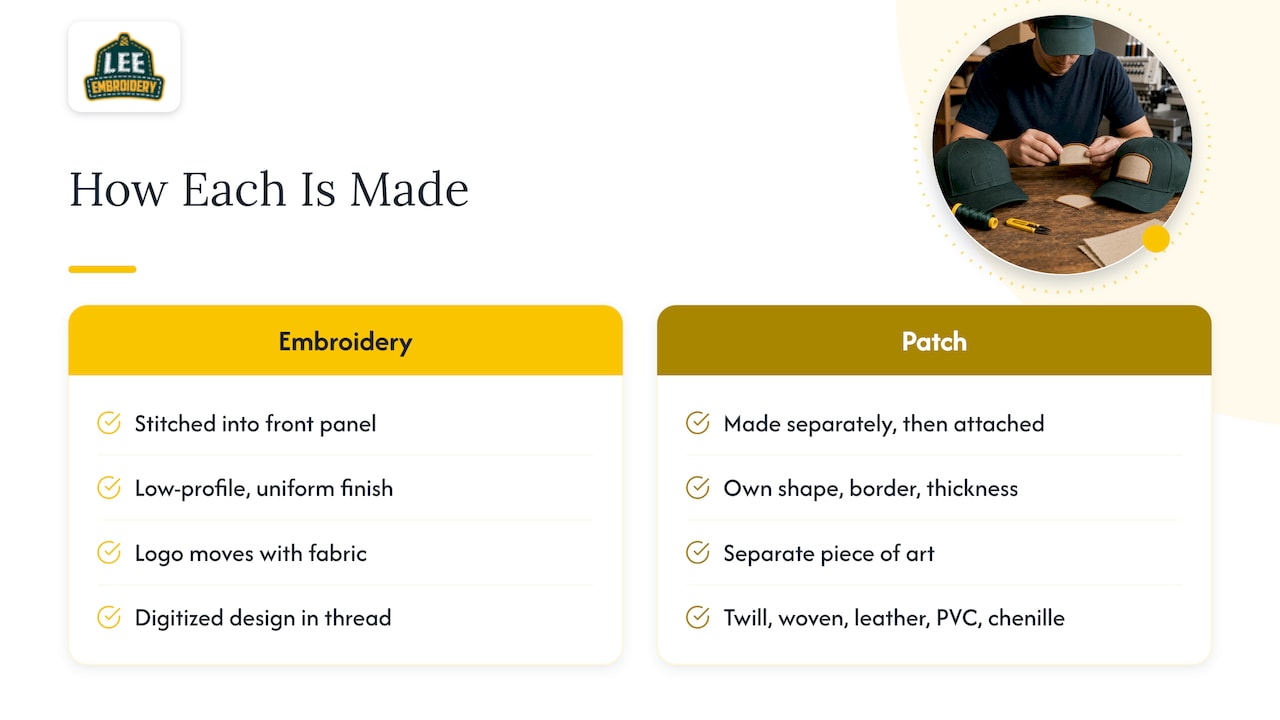
Direct embroidery means a machine stitches your digitized design into the hat’s front panel. The thread becomes part of the cap. The finish is low-profile and uniform, and the logo moves with the fabric.
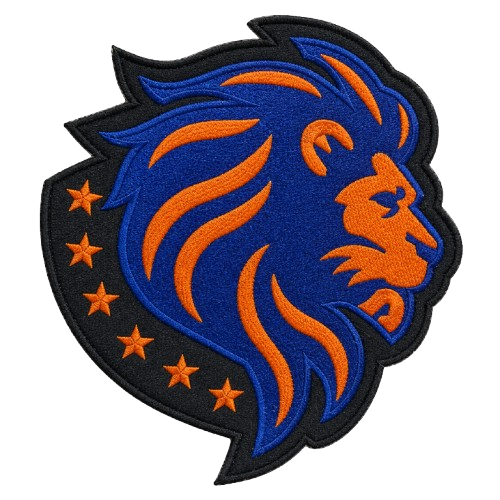
A patch hat starts with a separate piece: embroidered twill, woven fabric, leather, PVC rubber, chenille or a printed base. It is made on its own, then attached to the cap. Because the patch is its own object, it can have its own shape, border, thickness and material.
Think of it this way. Embroidery decorates the hat. A patch adds a small piece of art to it.
Look and feel: quiet or bold
Direct embroidery sits flush with the panel. It reads as classic and professional, which is why it dominates uniforms, corporate headwear and golf caps. Designers who compare the two describe embroidery as the “gold standard” for a professional, integrated look, while patches add tactile dimension that flat thread can’t match.
Patches are louder, in a good way. A raised chenille letter, a soft-touch PVC mascot or a stitched leather tag gives a cap shape and personality. The same source notes that the choice often follows brand identity: clean, corporate brands lean toward direct embroidery, while outdoor and creative brands choose patches for their rustic or modern texture.
A quick gut check:
- If you want people to read the logo and move on, embroider.
- If you want people to touch the hat, patch it.
How much detail your logo can carry
This is where most hat decisions are actually made.
Thread has physical width. Direct embroidery works best with simple, bold designs. Fine lines under about 1 mm and complex gradients often fail and come out blurry. The same guide gives a typical embroidery area of about 2.5 inches tall by 4 inches wide, with fine lines kept at least 0.05 inches (1.27 mm) thick. Printful’s design guidance says the same thing from the production side: lines below 1 mm and very small text either drop out or turn into an unreadable blur, so logos often need simplifying before digitizing.
What that means in practice:
| Your artwork | Better fit |
|---|---|
| Simple wordmark or icon, 1 to 4 colors | Direct embroidery |
| Tagline or small text under the size limits | Patch (or simplify the text) |
| Gradients, shading, photo-like detail | Printed or woven patch |
| Layered mascot with many small parts | Patch |
| Raised, dimensional lettering | Chenille patch or 3D-style finish |
| Rugged, worn-in brand image | Leather patch |
| Glossy, waterproof, soft-touch look | PVC patch |
Patches are not magic. Each patch type has its own limits. Woven patches handle very fine detail well, embroidered patches have a classic raised thread look, and chenille favors big, simple letterforms. Our guide to woven vs embroidered patches for apparel explains how to pick between those two.
Durability: what actually wears out
Both methods last when they’re done right, but they fail in different ways.
Direct embroidery is hard to damage because it’s integral to the fabric. Its weak points are the hat itself: a stretched, sweaty or heavily washed crown can pucker around the stitching. Quality starts with the backing underneath the fabric. Stabilizers are the foundation for high-quality machine embroidery, and a poorly stabilized design can pucker and distort.
A patch has a second point of failure: the attachment. A patch is only as good as how it’s held to the cap. Sew-on is the most secure. Iron-on and heat-applied patches depend on getting temperature, time and pressure right, which is why we recommend testing on scrap material first. See our notes on heat press settings for patches. Frayed edges are the other common complaint, and the border matters: merrowed, embroidered and laser-cut borders each behave differently. Our fraying patch edges guide covers fixes by material.
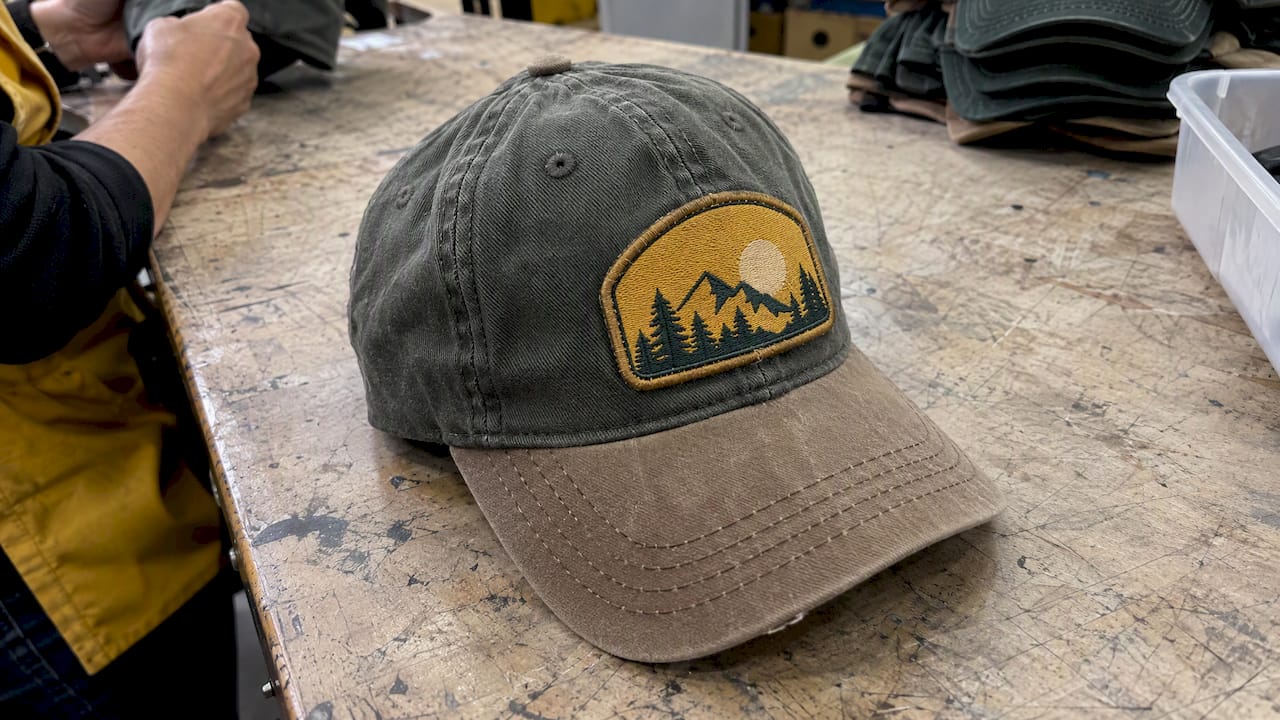
If your hats will be washed or worn hard, the material matters as much as the method. For PVC specifically, how long a PVC patch lasts depends on attachment and care.
Cost, order size and lead time
The honest answer: for a plain logo on a single hat style, direct embroidery is usually the cheaper route per piece, because there’s no separate component to manufacture. Patches add a production step, and the price depends on size, material, border, backing and quantity.
Patches start to make financial sense in a few situations:
- You use one logo on many products. One patch order can go on hats, jackets, bags and uniforms. Direct embroidery has to be set up and stitched on each item.
- You want to reuse stock. Patches can be stored and applied to hats as orders come in, so you don’t pre-decorate caps you may not sell.
- Your design is complex. Simplifying a logo to make it embroider cleanly can cost you the very thing that makes it distinctive.
We publish our pricing where we can. Custom patches with us start from $99. Our embroidery digitizing, which converts your design into a stitch-ready file for direct embroidery, is $10 for a cap design. Pricing for each patch type depends on your specs, so the fastest way to get an exact number is a free quote.
Lead time is the other variable. Direct embroidery is usually quicker because the patch has to be made first, then attached. Whatever you choose, build time for a sample round into your schedule.
Flexibility: what you can change later
This is the underrated difference.
Direct embroidery is permanent. If the logo changes, the hat is done. If you’ve over-ordered one style, the stock is committed.
A patch is modular. You can:
- Put the same patch on a trucker hat, a dad hat and a beanie.
- Offer customers a choice of patches on the same blank.
- Remove or replace a patch when a design is retired (with a sew-on patch, expect stitch holes).
- Build multi-patch designs, which have become a viral look on trucker hats and which direct embroidery can’t reproduce.
That modularity is also why patches have moved into retail. A national hat retailer has been offering in-store embroidery for over 20 years and planned stations for both embroidery and patch application in 2025. Hat bars where customers choose and apply patches on the spot are an experiential-retail trend, and analysts suggest treating patches as a tool for interaction because the customer can build a hat in under a minute.
Which hat styles suit which method
Cap structure matters more than people expect.
- Structured trucker and baseball caps take patches well. The firm front panel gives a flat surface, and a structured foam front is why some blanks, such as the OTTO 39-165 trucker, are frequently cited as top sellers for multi-patch designs.
- Unstructured dad hats can be embroidered easily, but a large or stiff patch can make the crown bow or sag. Keep patches smaller and lighter, or choose direct embroidery.
- Beanies suit small leather or woven patches. See our spec notes on a 2-inch beanie leather patch.
- Curved crowns are the usual reason a patch lifts at the edges. Size the patch for the curve, and sample before you commit.
If leather is on your shortlist, our guide to sampling small-batch leather patch hats shows how to avoid costly rework.
Our perspective
We make patches for a living, so you might expect us to say patches always win. They don’t.
If you have a simple wordmark, a single hat style and a corporate or team audience, direct embroidery is a sound, economical choice. If you have it, use it. What we see go wrong is a different problem: a detailed logo forced into embroidery, then simplified until it loses its character. That is when we suggest a patch.
The second thing we see is skipped samples. A hat is a three-dimensional, curved object, and artwork behaves differently on it than on a flat screen. A complimentary sample before bulk production is the cheapest insurance in the process. We offer one for exactly that reason.
Third, digitizing is craft, not conversion. A high-resolution image doesn’t automatically become a crisp stitch file. Someone has to decide stitch direction, density and what to simplify. That is why we offer digitizing as its own service, whether you send the finished file to your embroiderer or use it with us.
Our rule of thumb: if you’d describe your brand as sharp and clean, embroider. If you’d describe it as textured, handmade or collectible, patch it. If you can’t decide, sample both.
— Bilal
How to decide: a short checklist
Work through these in order.
- Check your artwork. Does it have lines thinner than about 1 mm, tiny text or gradients? If yes, lean toward a patch.
- Define the look. Quiet and integrated points to embroidery. Textured and dimensional points to patches.
- Count your products. One logo across several items favors patches. One hat style favors direct embroidery.
- Think about change. If the design may update or you want to swap options, choose patches.
- Pick a material. Embroidered for classic, woven for fine detail, leather for rugged, PVC for glossy and weatherproof, chenille for varsity texture.
- Sample. Test one hat before you commit to a bulk run.
Picking between materials? Our chenille vs embroidered patch comparison and the PVC vs embroidered patch checklist go deeper on common mistakes.
Get your hat patches made with us
We make embroidered, chenille, PVC, woven, leather and printed patches, with your choice of shape, border and backing: sew-on, iron-on, peel-and-stick or Velcro. Custom patches start from $99, shipping is free, and you can request a complimentary sample before committing to a bulk order. If you’re going the direct embroidery route, our embroidery digitizing service covers cap designs for $10.
Ready to compare? Browse our custom patches and request a free quote. You can also read what customers say on our reviews page.
FAQ
What is the difference between embroidery and patches on a hat?
Direct embroidery stitches thread into the hat’s fabric, so the design is part of the cap. A patch is a separate piece, made from twill, woven fabric, leather, PVC or chenille, then attached by sewing or heat. Embroidery sits flat and is permanent. A patch adds texture and can be changed.
Are patches on hats in style?
Yes. Multi-patch designs on trucker hats became a viral trend, and retailers have built customization areas around patches and embroidery. Single clean logos remain popular too, so style depends on your brand rather than a single trend.
Do patches work on hats?
They do, with the right size and attachment. Sew-on is the most secure, while heat-applied patches need tested settings. Curved crowns and soft, unstructured caps are where patches most often lift or sag, so sample before a large order.
What are the best patches for hats?
It depends on the look. Embroidered patches suit classic logos, woven patches suit fine detail, leather suits a rugged style, PVC suits a glossy, weather-resistant finish, and chenille suits letterman-style lettering. For small hats like beanies, keep patches small and light.
Sources
- Custom Hats: Embroidery, Patches, and Screen Print Options Compared
- How should I prepare my design for embroidery?
- E-ZEE Guide: backings for machine embroidery
- What Are the Trending Trucker Hat Designs
- Why hat retailer Lids is honing in on customization
- Headwear trends 2025